

 Português (Brasil)
 Español
 Français
 Deutsch
 Italiano
 Nederlands
 Svenska
 Srpski (latinica)
 日本語
 한국어
 简体中文
 हिन्दी
 Bahasa Indonesia
 Bahasa Melayu
 العربية
 עברית
Minecraft Curiosities: facts, easter eggs and history
From the 2009 Cave Game to 300 million copies: easter eggs, code bugs that became icons and secrets of Minecraft's history.
· 6 min read
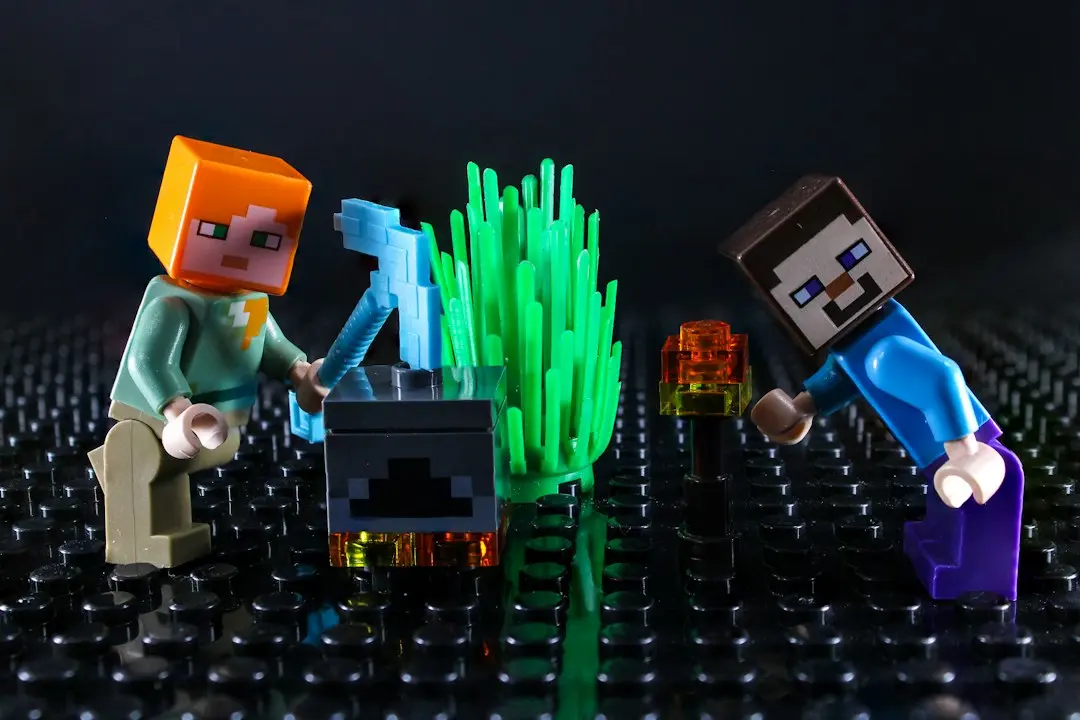
Minecraft trivia: facts, easter eggs, and history
On November 11, 2026, Minecraft won the Still Playing award at the Golden Joystick Awards, in the PC and console category — 17 years after its first public build. It's hard to think of another game that remains so alive: a solo project made in a room in Sweden became the best-selling title in history, got a movie, a school, mods, and a community that never stops creating.
This post gathers real trivia, secrets you can test in your world today, and some episodes from the game's history that explain why it still matters. No "unsourced urban legend": what's here is recorded on the official wiki, in changelogs, or in statements by Notch himself.
From a Java experiment to a worldwide phenomenon
Minecraft was born in May 2009 as a technical test by Markus "Notch" Persson, named Cave Game. The first truly playable version, Classic 0.0.11a, was released on May 17, 2009, for free, running directly in the browser — a Java applet. Before becoming "Minecraft", the project was even called Minecraft: Order of the Stone.
The inspiration came from much smaller games: Infiniminer, Dwarf Fortress, and Dungeon Keeper. Notch's idea was simple — a world of blocks where you break and place things —, but word of mouth on forums made the project grow faster than one person could keep up with.
Milestones in this timeline:
- 2009 — start of development and the first Classic, Survival Test, and Indev versions.
- 2010 — Alpha, followed by Beta in December; the Halloween Update (Alpha 1.2.0) brought the Nether and the clock.
- 2011 — at the end of 2010, Jens "Jeb" Bergensten takes over development leadership; version 1.0 is released on November 18, 2011, at MineCon in Las Vegas.
- 2014 — Microsoft buys Mojang for about US$ 2.5 billion, with the deal completed in November of that year.
- 2023 — Mojang announces the milestone of 300 million copies sold, making the game the best-selling of all time.
The Creeper is a pig that went wrong
The game's most recognizable face was born from a typo. In 2009, Notch was modeling a pig when he swapped the model's length and height variables. The result was a vertical, four-legged creature with a face like it's staring at you — and he decided to keep it. Then he painted it green, gave it a fuse sound, and turned it into a creature that explodes.
That's why the Creeper has no arms, no mouth, and makes no footstep sounds: it was never planned. Today it is the franchise's mascot and appears on T-shirts, plush toys, and even Halloween costumes.
Easter eggs that work in your world today
Secret nicknames for mobs
Putting a specific name on a name tag changes the behavior of some creatures. The command to get name tags:
/give @p minecraft:name_tag 5Then, rename it at the anvil and apply it to the mob:
- Dinnerbone or Grumm — the mob is turned upside down.
- jeb_ — the sheep starts cycling its wool color in a rainbow pattern (the name is a reference to Jeb himself).
- Toast — the rabbit gets black-and-white fur, a tribute to a community pet rabbit.
- Johnny — the vindicator starts attacking all mobs it encounters, not just the player. Excellent for events and arenas.
Minceraft: 1 in 10,000
In Java Edition, there is a 0.01% chance (1 in 10,000) that the title screen shows "Minceraft" instead of "Minecraft". It is one of the game's oldest easter eggs and has been seen by millions of players without them noticing. The screen also randomly picks, each time it opens, one of the hundreds of yellow splash texts — inside jokes, meme references, and teasing lines that change from version to version.
Creatures that exist only by command
- Killer Bunny: a hostile variant with red eyes that does not appear naturally in the world — it is summoned only by command, and it references the rabbit from Monty Python and the Holy Grail.
- Blue axolotl: a breeding result with a chance of about 1 in 1,200.
- Charged Creeper: appears when a creeper is struck by lightning; its explosion leaves mob heads on the ground.
Far Lands: where the world broke
Before Beta 1.8, walking far enough broke terrain generation. Starting at ±12,550,821 blocks from spawn, integer overflow turned the world into stone walls and impossible caves — the famous Far Lands. It was not a planned secret, it was a bug, and the fix came along with the rewrite of world generation in 2011.
In 1.7.2, Mojang solved the problem for good with the world border, at approximately 29,999,984 blocks. And it's worth remembering: since 1.18, world height ranges from -64 to 320, which completely changed the scale of possible builds.
Herobrine never existed
Herobrine is probably the community's biggest myth: a white-eyed creature that supposedly appeared in single-player worlds. There was never any Herobrine in the vanilla game. The rumor started in 2010 in a forum post and became a legend. Mojang joined the joke in the changelogs, with the line "Removed Herobrine" in several updates — which, for many people, was proof that he really existed.
Music, records, and mods that became official
- The original soundtrack is by C418 (Daniel Rosenfeld), with the albums Volume Alpha (2011) and Volume Beta (2013).
- Pigstep, by Lena Raine, arrived in 1.16 and was the game's first music disc not composed by C418.
- The poem that appears after defeating the Ender Dragon was written by Irish author Julian Gough — a text that became a collector's item on the internet.
- Pistons started as a community mod and entered the game in Beta 1.7. Horses, inspired by the Mo' Creatures mod, arrived in 1.6. In other words: part of official Minecraft was born from players' ideas.
What 2026 says about the game
Minecraft continues to be updated at a fast pace. On November 10, 2026, Java Edition's 26.4 Snapshot 8 fixed long-standing issues with Ender Dragon flight and added the Javanese and Zamboanga Chavacano languages. In Bedrock, beta 26.70.24 brought invisible armor, mouse support with the Switch 2 Joy-Con, and the expansion of Vibrant Visuals to more Android devices.
And its global reach remains impressive: Minecraft China, operated by NetEase, announced at the Shanghai creators conference on October 29 that it had reached 100 million annual active players. Add the Still Playing award at the Golden Joystick, and it's clear: this isn't nostalgia, it's a game that is still played every day.
How to use these fun facts on your server
They make for simple events that are cheap to organize:
- Set up an "Easter egg museum" with signs explaining each secret and a room with renamed mobs.
- Hand out name tags with the secret names and let people discover the effect for themselves.
- Create a killer rabbit arena or a charged creeper hunt (with controlled weather, so no one's base gets blown up).
- Standardize the event rules in chat and avoid chaos: whoever leaves the world takes the mob with them.
If the plan is to open a server just for fun, you can get everything running in less than a minute on Mine Hour: hosting is charged per hour of use and pauses automatically when the last player leaves, so idle hours don't hurt your wallet. For a weekend event with friends, it's much more practical than keeping a machine running for no reason.
Conclusion
Minecraft is a game made of happy accidents: a pig that became a monster, a bug that became a legend, a poem at the end of the world, and mods that Mojang adopted as official. Understanding this history helps you look at the game in a different light — and realize that the best ideas for your server may very well come from your own players. Try the Easter eggs with your crew and tell me how they reacted.
Sources
- Minecraft takes the Still Playing award at the Golden Joystick Awards 2026
- Minecraft 26.4 Snapshot 8 fixes Ender Dragon flight
- Minecraft China reaches 100m annual active players — PocketGamer.biz
- Minecraft Easter Eggs: Dinnerbone, jeb_, the Killer Bunny and More
- The Far Lands Legacy — Craftdex
- Minecraft Timeline: Every Major Milestone from 2009 to 2025
- Mojang Studios: the creators of Minecraft
- The history of Minecraft: origin, success, and cultural impact — Estadão
More posts
 How to import a world to the Minecraft serverStep by step to move the single-player world (or another host's) to the server: correct folders, level-name, 26.1 changes and common mistakes.
 How to install plugins on a Minecraft server (Paper)Step-by-step guide to installing plugins on your Paper server: where to download them, how to check whether they loaded, which ones are worth getting first, and how to fix the most common errors.
 How to configure a Minecraft server: administration guideserver.properties, whitelist, operators, gamerules, backups and version switching: the practical guide to administering your Minecraft server without breaking the world.
 Building and survival games to play with friendsSeven building and survival games to play with friends: what each one does best, how many players they support, and how to keep the world online without depending on the host.