

 Português (Brasil)
 Español
 Français
 Deutsch
 Italiano
 Nederlands
 Svenska
 Srpski (latinica)
 日本語
 한국어
 简体中文
 हिन्दी
 Bahasa Indonesia
 Bahasa Melayu
 العربية
 עברית
Ideas for playing Minecraft with friends: SMP and minigames
SMP styles, challenges, minigames, events and seasons: practical ideas to keep your Minecraft server lively with friends for months.
· 5 min read
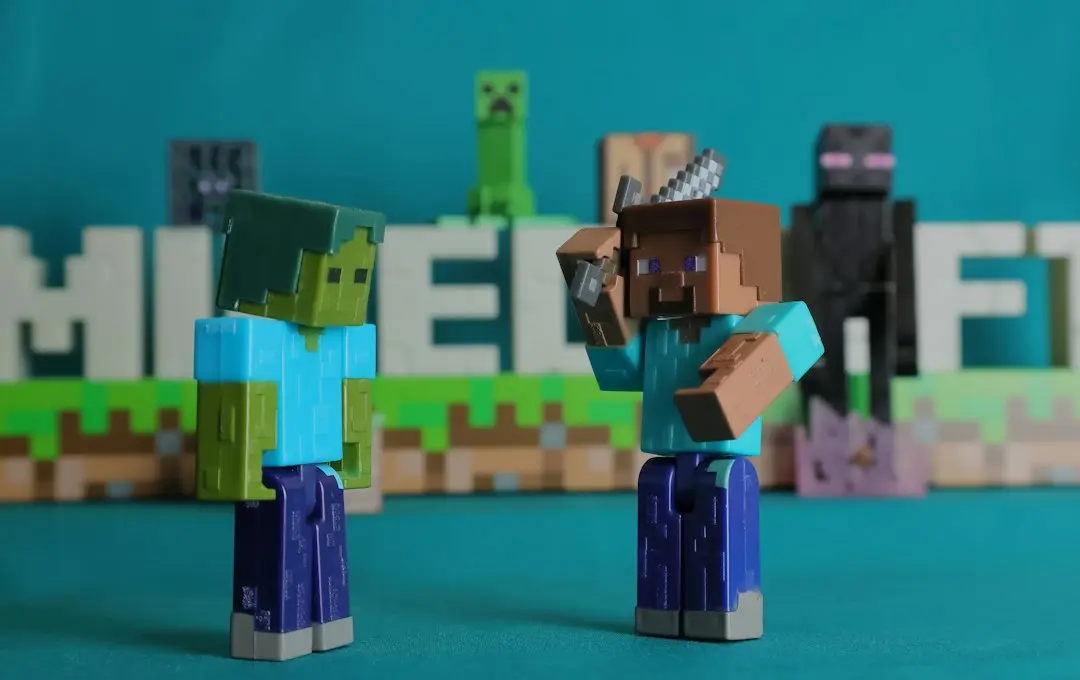
Ideas for playing Minecraft with friends: SMP and minigames
Opening a Minecraft server with friends is easy. The hard part is keeping everyone playing after the third week, when the base is already built, the armor is netherite, and someone asks in the group: "what now?". This guide brings together tested ideas for SMP styles, challenges, minigames, events, and seasons — the way it works in practice, with a small group and little time per day.
1. Choose the SMP style before opening the world
The biggest mistake in a server among friends is starting without agreeing on the style. Each person joins expecting something different, and friction appears quickly. Define this in the first conversation.
Classic SMP (cooperative)
Everyone together, close bases, community projects: a collective iron farm, ice road, Nether hub. It works well with 3 to 8 players who like to build. The pace is slow by nature, so agree on weekly goals (one megabuild per month, for example) so it doesn't fizzle out.
SMP with an economy and small shops
Each player has their own plot, there is a currency, and trading villagers at spawn. It encourages commerce, healthy rivalry, and visits. It requires an economy plugin and a simple rule: no infinite farm sold to the server, only trading between players.
Season-based SMP
The world lasts 6 to 10 weeks, with a theme (ice age, island, desert survival) and a final goal. At closing, there's a group screenshot, reset, and everyone starts over with new energy. It's the format that holds a community together the longest, because it turns "there's nothing left to do" into "here comes the next one."
SMP with a twist (hardcore, one life, crazy rules)
One life only, permanent damage, sleeping forbidden, trading only by direct exchange. The twist doesn't need to be difficult: it needs to be a restriction that forces different decisions. Examples that work: no one can craft iron (only find it in structures), no bed, no elytra, and no villages.
2. Challenges that work in everyday play
A good challenge is short, has clear rules, and creates a story to tell later. Some that deliver:
- Nether race: the first to reach the fortress or take a bastion wins the prize.
- Dragon hunt in pairs: teams of two, a world with only the End portal unlocked from day one.
- No crafting anything: you only use what you find in chests, structures, and mob drops.
- One-block base: everyone builds inside one chunk — literally.
- Shop war: 48h to open the most profitable shop at spawn, vote in the group.
- Death swap: every few minutes players swap positions. There are third-party plugins to automate this, such as variations of the classic DeathSwap.
- Hide-and-seek with hunters: Hide and Hunt mode or prop hunt variations, if you want something more "party game".
3. Minigames: how to organize without it turning into a mess
A minigame in the same SMP world always ends in disaster: someone brings a PvP item to the arena, someone breaks the map, someone loses their inventory. Two ways out:
- Separate world: create multiple worlds with a worlds plugin (like Multiverse) and use
/mvtpto go back and forth. No items crossing over. - Separate server: a minigames-only instance that you turn on on game days and turn off afterward.
The second option is the cleanest and, if you host by the hour, also the most economical: the minigame server only exists while it is being used. On Mine Hour (https://www.minehour.com) you can spin up a Paper server with the minigame plugins, play all night, and pause — paused time is not charged.
Suggested combination for small groups (4 to 10 people): spleef, 2v2 bed wars, elytra race with checkpoints, and parkour with a timer. Four modes are already enough for months of rotation.
4. Event calendar: the secret is having a set day
A server dies from lack of agreement, not lack of content. A simple calendar solves it:
- Monday: free night.
- Wednesday: surprise event (10 to 20 minutes, announced that day).
- Saturday: main session, 2 to 3 hours, with a defined goal.
- Sunday: market at spawn and weekly vote.
Events that work without any plugin: item auction, themed build contest, treasure hunt with hidden chests, fishing tournament, "chaos day" (doubled mobs, PvP enabled), and guided tour of the bases.
A tip: keep a chest at spawn with event kits (armor, food, potions, blocks). When the event starts, no one wastes 20 minutes gearing up.
5. Seasons: how to close well and reopen better
Closing a season is the most delicate moment. Do it like this:
- Announce the end two weeks in advance.
- Schedule the closing event (final war, boss fight, race).
- Take screenshots and an aerial video of the world with
/spectatoror a map plugin. - Back up the world — always. Anyone who doesn't want to lose the old base can visit it later.
- Publish the rules and the theme of the next season in the same announcement.
With automatic backups, this step stops being a drama. It's worth checking whether the hosting plan generates backups on its own before starting the season.
6. Minimum rules that prevent fights
Don't make a 40-line PDF. Five rules solve 90% of the problems:
- Don't break other people's builds, not even "just one little block".
- PvP only by agreement between the parties (or only in the arena).
- Griefing, x-ray and modified clients that give an advantage: out.
- Event items don't leave the event.
- Personal problems get resolved in private, not in the general chat.
Put the rules at spawn, on signs, and not just on Discord. People who join by IP rarely read the group.
7. Commands and tweaks that really help
A friends' server doesn't need a giant network configuration, but a few tweaks make a difference. In server.properties, for example:
online-mode=true
difficulty=normal
pvp=true
spawn-protection=16
max-players=20
view-distance=8
simulation-distance=6
enable-command-block=true
allow-flight=false
white-list=true
And in-game, to make the world more comfortable for the group:
/gamerule keepInventory true
/gamerule doInsomnia false
/gamerule playersSleepingPercentage 50
/gamerule mobGriefing false
/gamerule doFireTick false
/gamerule randomTickSpeed 3
playersSleepingPercentage 50 is the most underrated on the list: half the group sleeping already skips the night, and nobody is left waiting for the last player.
To allow entry to guests only:
/whitelist on
/whitelist add NomeDoAmigo
/whitelist reload
If the group is large and entry is open, a land protection plugin (like WorldGuard or similar) marking an area at spawn is worth it, plus a block log plugin (like CoreProtect) to settle "who broke my house" with facts and not accusations.
Conclusion
A server with friends doesn't live on infinite content, it lives on routine: an agreed-upon SMP style, a fixed weekly event, a clear rule and a season with a beginning and an end. Start small — a clean Paper, the essential plugins, whitelist on — and keep adding modes as the group asks for them. If you want to spin up that server in less than a minute and leave everything paused when nobody is online, it's worth checking out Mine Hour's hourly hosting (https://www.minehour.com): you create the world today, test it with the group and adjust later.
Sources
More posts
 How to import a world to the Minecraft serverStep by step to move the single-player world (or another host's) to the server: correct folders, level-name, 26.1 changes and common mistakes.
 How to install plugins on a Minecraft server (Paper)Step-by-step guide to installing plugins on your Paper server: where to download them, how to check whether they loaded, which ones are worth getting first, and how to fix the most common errors.
 How to configure a Minecraft server: administration guideserver.properties, whitelist, operators, gamerules, backups and version switching: the practical guide to administering your Minecraft server without breaking the world.
 Building and survival games to play with friendsSeven building and survival games to play with friends: what each one does best, how many players they support, and how to keep the world online without depending on the host.